FREE SHIPPING - ONLINE SUPPORT 24/7
FREE SHIPPING - ONLINE SUPPORT 24/7
Browse the full print catalog in a cleaner, more modern layout while keeping the same shopping flow, pagination and book access behavior already working on your site.





The Knife and the Conscience by Prof. Dr. Sreedhar Saraswathy is a compelling exploration of the ethical, moral, and human dimensions of modern medical practice. Blending clinical experience with thoughtful reflection, the book examines the complex decisions that healthcare professionals face when balancing scientific expertise with compassion, integrity, and responsibility. Through real-world perspectives and insightful discussions, the author delves into the ethical challenges surrounding surgery, patient care, informed consent, end-of-life decisions, professional accountability, and the doctor-patient relationship. It highlights how medical professionals must navigate situations where technical excellence alone is not enough, and where conscience, empathy, and ethical judgment play an equally vital role. The book emphasizes the importance of medical professionalism, ethical leadership, and patient-centered care in an era of rapidly advancing healthcare technologies and evolving clinical practices. It encourages readers to reflect on the values that define exceptional medical practice and the responsibilities that accompany the privilege of caring for human life. Written for healthcare professionals, medical students, educators, researchers, and anyone interested in the intersection of medicine and ethics, The Knife and the Conscience serves as an invaluable guide to understanding the moral foundations of healthcare. It inspires readers to appreciate that every medical decision involves not only the precision of the knife but also the wisdom of the conscience.
This book was born out of a desire to explore the signi?cant shifts in employee behaviour and organizational challenges that have come to de?ne the modern workplace. The COVID-19 pandemic accelerated many underlying trends, bringing phenomena such as the great-resignation, moonlighting, toxic leadership, and quiet-quitting to the forefront of organizational discourse. Through detailed case studies and critical analysis, this book examines how these trends impact employees and employers alike, offering strategies to mitigate risks and capitalize on opportunities. The chapters are designed to engage readers with discussion questions that encourage re?ection and application. Our goal is to provide both scholars and practitioners with a comprehensive understanding of these evolving workplace dynamics and equip them with practical tools to foster positive organizational cultures and sustainable talent management practices. References to events, news and data are based on secondary data and information available through media and scholarly publications. A proper reference to all such sources has been made. The intention is to generate academic discussion around the phenomenon and not to comment on the company dynamics as such. We want to thank all those who contributed insights, data, and feedback during the development of this book. We hope this work inspires constructive conversations and innovative solutions for the future of work.
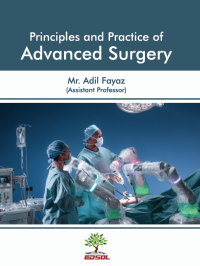
Principles and Practice of Advanced Surgery is a comprehensive guide designed to provide medical students, surgical trainees, and healthcare professionals with a thorough understanding of modern surgical science and clinical practice. The book integrates fundamental surgical principles with advanced operative techniques, offering evidence-based knowledge essential for contemporary surgical care. Covering preoperative assessment, surgical anatomy, operative procedures, postoperative management, and complication prevention, the text emphasizes patient safety, clinical decision-making, and best practices in surgery. Rich with practical insights and current developments, the book serves as a valuable resource for academic study, professional training, and clinical reference. Whether preparing for examinations or enhancing surgical expertise, readers will benefit from the book’s clear explanations, systematic approach, and focus on real-world surgical applications.
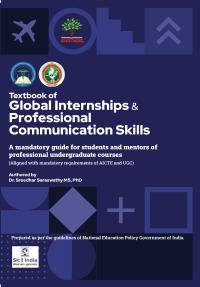
This book has provided a comprehensive exploration of research method-ology and professional soft skills essential for academic excellence and success in diverse professional environments. We began by laying a solid foundation in research, covering the types of research and the systematic process of de?ning and addressing research problems. Readers have learned e?ective techniques for literature survey-ing, utilizing a range of resources from traditional libraries to modern on-line databases. The importance of meticulous documentation and ethical considerations in research has been emphasized, alongside practical guid-ance on data collection, hypothesis testing, and statistical analysis using advanced software tools. Throughout, our aim has been to equip readers with the skills and knowledge necessary to conduct rigorous and ethical research that contributes meaningfully to their ?elds of study. Comple-menting research methodology, we have explored vital soft skills crucial for navigating today's dynamic professional landscape. From mastering communication and email etiquette to understanding the psychology of professionalism and stress management, readers have gained insights into fostering productive relationships and managing personal and pro-fessional well-being. Topics such as networking skills, ethical conduct,and workplace etiquette have further prepared readers to excel in diverse organizational cultures and contexts.
Muslim Philosophy: Before and After Al-Ghazzali by Hamid Naseem Rafiabadi is a comprehensive study of the evolution of Islamic philosophical thought, examining its foundations, major intellectual traditions, and transformative developments before and after the influential contributions of Al-Ghazzali. The book explores the interaction between philosophy, theology, and spirituality within the Muslim intellectual tradition, highlighting the works of prominent philosophers and their impact on Islamic civilization. It provides valuable insights into key philosophical debates, concepts, and historical developments, making it an essential resource for students, scholars, and readers interested in Islamic studies, philosophy, and comparative religion. Author: Hamid Naseem Rafiabadi
A Handbook on Comprehension and Communication Skills is a meticulously designed resource aimed at enhancing the English communication pro?ciency of undergraduate engineering students and beyond. In an era where technical exper-tise must be complemented by articulate expression, this book bridges the crucial gap between knowledge and its e?ective dissemination. Structured to align with the curricula of technical and agricultural universities across India, this handbook covers a broad spectrum of communication skills. It o?ers a balanced approach that integrates theoretical foundations with practical applications, making it an indispensable tool for students, educators, and profes-sionals alike. Topics range from reading comprehension, vocabulary building, and professional writing to crucial soft skills such as public speaking, group discussions,and listening techniques. Additionally, chapters on email etiquette, résumé writing,and workplace communication provide learners with essential career-ready skills.
e book comprises twelve chapters spread over 354 typed pages. Each chapter, at the end, provides all the formulae under the subheading of highlight, some possible questions and several MCQs with explanations for making students understand and memorise the subject better. The ?rst chapter discusses the importance and all basic terminologies of thermodynamics, and the zeroth law. e second and the third chapters cover the ?rst law of thermodynamics and thermochemistry respectively, accompanied by citation of multiple solved problems. e fourth chapter describes the second law of thermodynamics which includes the recent topic of “Plasma ermodynamics”.e ?h, the sixth, the seventh and the eighth chapters elaborate on free energy,the chemical potential and phase equillibrium, the third law of thermodynamics and statistical thermodynamics respectively. e ninth Chapter throws light on nonequlibrium thermodynamics which contains several examples of biological processes along with their pictorial representation. e tenth Chapter narrates phase equilibrium. e eleventh chapter elucidates thermodynamics of liquids, di?erent properties of liquids, theories and their industrial applications. e twelh Chapter explains the applications of the law of thermodynamics which includes various heat engines, refrigerators and, specially, ?ve types of internal combustion engines.
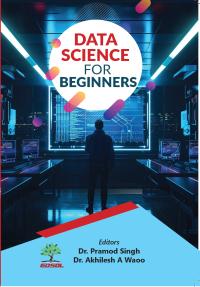
Data Science has emerged as a transformative discipline, profoundly im-pacting diverse ?elds and industries by enabling data-driven decision-mak-ing and unveiling hidden insights. With the rapid increase in data generation and advancements in computing power, it has become crucial for aspiring professionals to understand the fundamentals of this domain. This book,*Data Science for Beginners*, is a comprehensive guide crafted for those who are taking their ?rst steps into this exciting ?eld. The objective of this book is to simplify complex concepts and present them in a manner that is easily understandable for beginners, without compro-mising on the depth and accuracy of the subject matter. We aim to provide readers with a solid foundation in key areas of Data Science, such as data preprocessing, exploratory data analysis, machine learning, and data visu-alization.