FREE SHIPPING - ONLINE SUPPORT 24/7
FREE SHIPPING - ONLINE SUPPORT 24/7
Browse the full print catalog in a cleaner, more modern layout while keeping the same shopping flow, pagination and book access behavior already working on your site.
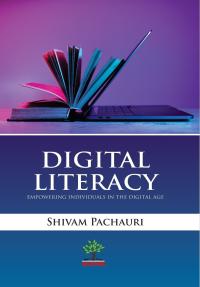



This book, “Digital Literacy: Empowering Individuals in the Digital Age,” aims to shed light on the importance of digital literacy and provide a comprehensive guide for individuals seeking to enhance their digital skills and knowledge. It serves as a roadmap, equipping readers with the necessary tools to harness the power of technology and make informed decisions in a rapidly changing digital landscape. In the following pages, we will explore the various dimensions of digital literacy,delving into topics such as internet safety, media literacy, digital citizenship,information literacy, and critical thinking. We will examine the impact of digital technologies on different aspects of our lives, from education and employment to communication and personal development. Through practical examples, case studies, and step-by-step tutorials, this book aims to demystify the digital world and empower readers to become active participants rather than passive consumers. It will provide insights into effective strategies for evaluating the credibility of online information, protecting personal data and privacy, and cultivating responsible digital behaviors.
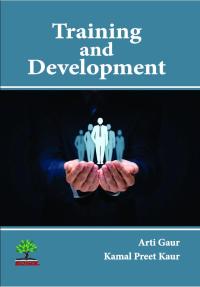
The framework of concept of training and development has an emerging concept and become a strategic option in the ?eld of human resources. Demand of every industry goes on increasing and challenging in the day to day environment which is easily re?ected in the activity of training and development process. This book of Training and Development includes various parts of training and development in a very interesting and clear manner which results in achieving good. The content contained in this book is speci?cally meant for students of MBA and it cover regions of Haryana, Punjab and Delhi. At the end of every chapter some questions have also been given so that students can assess their level of learning. This book is divided into four units according to the syllabus of di?erent universities:First unit brief about the introduction, concept, and process of training and development. It also gives a view point on training needs assessment, succession planning and competency mapping. Second unit entails e?ective designing of TNA (Training Needs Assessment) and learning. Third unit deals with several methods and techniques of training which includes on-the-job, o?-the-job and various inspirational methods of training. Fourth unit includes validation and evaluation of training. It is about the future aspect of training and development, some emerging concepts and several institutions which gives signi?cance contribution to it.
The Bottomless Hourglassis a collection of poems by young emerging Kashmiri poet Aamina Hamid. With the emergence of young voices in art, culture,literature, Aamina symbolises the young Kashmiri youth self-made and self-taught making their mark for times to come. This cartography of mind is charted through a collection of 103 prose poems. While giving the poet liberty to ?irt with language and ideas, the poems de?nitely steer away from being prosaic. Aamina, not only reinvents but re-inverts the traditional metaphors to create breathtaking new turns of language and ideas. Does the candle spend itself or does the darkness prey on its light? What do we exactly “mourn” when we mourn others? The loved one or the loss of self that sel?shly clings to the loved one?How can fate be reversed when it is not written by a grand feather pen with ink that can be washed by water but when it is written by the stubborn ink of a not-so-fancy ball point pen?The Bottomless Hourglassattempts to dabble with such and many more questions. The very title of the collection is symbolic as time has ceased to slip us by. The real horror is to feel ourselves trapped in this column of time with nothing slipping by but being looped eternally and helplessly. The collection helps us taste the raw taste of blood, the insanely unruly nerves, the shame of facing those we love while we fail ourselves. It speaks about loss, love and struggle to exist-the timeless issues of humanity in a language which is the poets own (and de?nitely owned). The imagery is the poet’s personal revelation of self and we are caught in the maze of poetry that demands something essential from our wavering attention spans and a screen consumed mind. We ?nd the poet herself, the poets (like Ghalib pleasantly), ourselves, our not so selves in the cracks between the lines; the missing hyphens; the gaps in thoughts; and the blurring pictures.
In a world where stress has become the new normal and lifestyle diseases are reaching epi-demic proportions, this book arrives as both a scienti?c exploration and a practical guide—a bridge between the wisdom of ancient yogic traditions and the demands of contemporary ev-idence-based practice. This isn't just another collection of yoga poses or philosophical mus-ings; it's a rigorous, multi-disciplinary investigation into how and why yoga works, backed by research, clinical studies, and real-world applications across three interconnected domains:Education, where yoga transforms learning environments and equips students with lifelong tools for emotional regulation; Physiotherapy, where it serves as a powerful ally in managing chronic pain, supporting rehabilitation, and complementing conventional treatment protocols;and Physical Education, where it democratizes physical well-being from adaptive yoga for individuals with disabilities to geriatric programs for healthy aging. Each chapter is crafted by experts who are not only academics but also practitioners—people who understand yoga both from the laboratory and the mat, from the clinic and the classroom—tackling questions that matter: Can yoga truly improve academic performance? Does it o?er measurable relief for chronic conditions? How can it be adapted for diverse populations? While grounded in scienti?c methodology, this book never loses sight of yoga's ultimate purpose: transformation,celebrating the human element between statistical analyses—the teacher who discovered new ways to reach struggling students, the physiotherapist who witnessed unexpected recoveries,and everyday individuals who reclaimed their health and vitality. Whether you're an educa-tor seeking evidence-based wellness programs, a healthcare professional wanting to integrate complementary approaches, a researcher exploring the intersection of traditional practices and modern science, a yoga teacher looking to deepen understanding with scienti?c validation,a policymaker designing community wellness initiatives, or simply someone curious about whether yoga's ancient promises hold up under scienti?c scrutiny, this book o?ers an entry point into a fascinating conversation between ancient and modern, East and West, intuition and evidence, tradition and innovation. Consider this your invitation to discover how yoga—once con?ned to ashrams and studios—has journeyed into research laboratories, hospitals, schools,and rehabilitation centers worldwide, documenting not just its remarkable past but pointing toward an even more promising future where yoga's bene?ts are accessible to all, supported by evidence, and integrated into the fabric of how we educate, heal, and live.
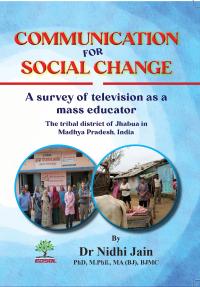
The book is about Communication for Social Change (CfSC). This is also referred to asCommunication for Development(CfD),Development Communication(DC),Communication for Development and Social Change(CfD&SC). It is a relatively newly developed ?eld of study, but fast emerging as major ?eld of study within the academic discipline of media studies. The FAO (Food and Agricultural Organization) of the United Nations (UN) has established a separate“Com-munication for Development Group”exclusively for carrying out research and innovations in this ?eld; likewise, the UNESCO of the UN has also established a Chair in Mass Communication. The World Bank has also set up a separate“Development Communication Division”for the exclusive study of this new ?eld.The GTZ (Sector Projects: Knowledge Systems in Rural Areas, Germany) (2006: 7, 8) of the Government of Germany has enriched it further by converting“Communication"to "Strategic Communication and Development to Sustainable Development".

This book is structured to provide a systematic approach to learning, start-ing with the fundamental concepts of pilot plant design and scaling up op-erations. Each chapter delves into speci?c aspects such as validation pro-cedures, equipment quali?cation, process validation, and industrial safety,o?ering in-depth insights supported by theoretical frameworks and practi-cal applications. Our aim is to equip students, researchers, and industry professionals with the requisite knowledge and practical skills to e?ectively manage scale-up processes, facilitate seamless technology transfer, and ensure adherence to stringent safety and environmental standards.We also extend our gratitude to the readers whose commitment to continuous learning drives innovation and excellence in the pharmaceutical industry. It is our sincere hope that this book serves as a valuable resource in your journey toward mastering the intricacies of scale-up and technology trans-fer in the pharmaceutical industry.

Allied Health Sciences is structured to o?er readers both foundational and applica-tion-based perspectives. Early chapters bring forth diagnostic and laboratory-oriented research related to immunological, microbial, and hematological sciences alongside in-novative diagnostic imaging techniques and forensic advancements. The latter section focuses on physiotherapeutic rehabilitation including sports rehabilitation, tele-rehabil-itation, neuroplasticity, conservative management approaches, and case-based clinical reasoning. This combination provides an integrated understanding of how paramedical investigation informs therapeutic decision-making and patient rehabilitation, especial-ly in complex or multi-system disorders. The book intends to serve as a comprehensive academic resource for undergraduate and postgraduate students, research scholars, educators, and healthcare professionals in allied health sciences. By showcasing contemporary research work and emerging clinical directions, the volume encourages critical thinking, fosters scholarly exchange,and promotes the adoption of evidence-based practices within academic and clinical settings. We acknowledge and appreciate the contributions of all authors and collaborators whose commitment and intellectual rigor have enriched this volume. We also acknowl-edge the support of the institution and publishing team for facilitating this publication.We hope this book stimulates continued inquiry, interdisciplinary dialogue, and further advancements in the ?elds of paramedical and physiotherapy sciences.
This book,?Startups for Viksit Bharat-2047?is more than a manual of enterprise; it is a meditation on destiny. Prof. (Dr.) Dinabandhu Mukhopadhyay, Prof. (Dr.) Raj Kumar, and CMADr. Sumita Chakraborty have woven together scholarship and vision, pragmatism and poetry, to remind us that the true architects of India?s future are not only policymakers or institutions, butthe millions of entrepreneurs who carry within them the spark of innovation and resilience. Startups and MSMEs are the pulse of this transformation. They embody the restless energy of youth, the ingenuity of rural communities, and the determination of small-town dreamers. They are the bridges between tradition and technology, between local aspiration and global relevance. To empower them is to empower India itself. The roadmap articulated here is both strategic and soulful. It speaks of financial inclusion,digital empowerment, and sustainability, but it also whispers of dignity, responsibility, and shared purpose. It calls for enterprises that do not merely chase profit, but cultivate resilience,nurture communities, and contribute to the collective strength of the nation. In this vision,entrepreneurship becomes not just an economic act, but a moral one, a way of participating in the unfolding story of India. What distinguishes this work is its clarity of direction and its depth of conviction. It does not present Startups and MSMEs as isolated ventures, but as threads in a larger tapestry of national renewal. It invites policymakers, educators, and entrepreneurs alike to walk together, to see enterprise as companionship in the journey toward a self-reliant and inclusive India.